
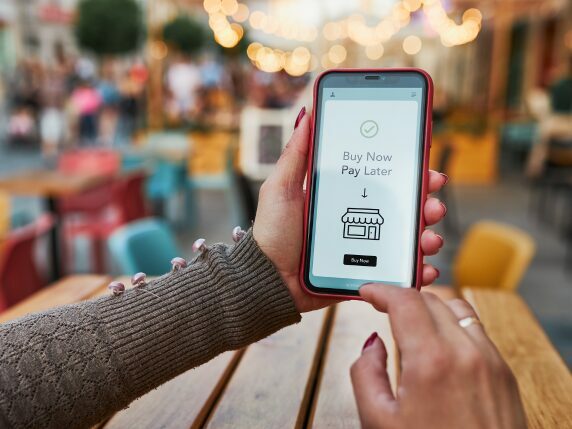
The UK government has confirmed that third-party provided interest-free buy now, pay later (BNPL) products will come under the Financial Conduct Authority’s (FCA) supervision from July 2026. This is a significant shift as BNPL has previously operated outside FCA rules, but now third-party providers must be authorised and follow strict requirements around customer protection, affordability, marketing and complaints handling.
For retailers, service providers and e-commerce businesses, early awareness and action will make compliance more straightforward ahead of new regulations coming into force. This includes consideration of the options available, such as continuing with third-party providers or operating an in-house BNPL scheme.
How the new regulations might impact your business
From 15 July 2026, any third-party BNPL lender offering in-scope agreements must either hold the requisite FCA authorisation or operate under the FCA's temporary permissions regime (or be exempt, including as an appointed representative of such a firm).
Going forward, third-party BNPL providers will need to:
- Be authorised by the FCA, exempt or obtain temporary permission before offering new BNPL agreements.
- Provide clearer information to customers and carry out proportionate credit checks.
- Support customers in financial difficulty and offer formal redress through the Financial Ombudsman.
- Update complaint handling and dispute resolution processes to meet regulatory standards.
For businesses who want to continue offering this payment option to consumers (which can also include sole traders), this means working only with compliant third-party BNPL providers and updating your own customer communications and procedures to reflect new obligations. If your provider is taking the temporary permissions route, the notification window is short and opens 15 May 2026, closing 1 July 2026. That leaves limited time to act, so it's worth checking in with your provider as soon as possible.
The reassuring news is that businesses who offer a third-party BNPL option at checkout won’t need FCA authorisation for credit broking. However, “not authorised” doesn’t mean “unaffected”, and if you rely on third-party BNPL providers at checkout, there could be an indirect impact on your customer journey and business including:
- Loss of BNPL option – if your provider does not secure FCA authorisation or temporary permission in time, you may have to remove BNPL from your checkout.
- Increased cost and complexity – providers may pass on the costs of compliance, including detailed customer onboarding, creditworthiness checks, marketing restrictions, and new data collection obligations.
- Disrupted customer experience – checkout journeys may become less smooth, with more steps for the customer and stricter approval processes.
- Promotions of BNPL are not exempt from regulation – the strict requirements of the financial promotions regime applies to advertising BNPL, even where the agreements themselves are exempt. So, you should check whether your customer comms, primarily your website, are compliant with that regime.
BNPL options for merchants
If you wish to offer BNLP options for your customers, there are two main routes to compliance:
- Review your third-party BNPL arrangements where applicable – ask your providers about their authorisation status or plans, map your responsibilities for messaging and promotions, and update customer service and complaints processes.
- Continue or begin offering your own in-house BNPL product – you can still offer interest-free instalment plans directly, provided the arrangement meets the conditions of the existing “unregulated BNPL” exemption – including that repayment is within 12 months, up to 12 instalments, and no interest, fees or charges are applied. This remains outside FCA regulation and gives you direct control. For many businesses, this exemption offers a practical alternative as the new regulatory framework comes into force. While this option places the finance risk on your business, that needs to be balanced against potentially boosting sales and, if applicable, reducing fees by avoiding third-party BNPL providers.
How to get ahead of the deadline
If these changes affect your business and you want to ensure compliance and a smooth transition, we recommend you start to prepare now by:
- Carry out a health check of your BNPL set-up – to identify in-scope products and services and the options are available to you.
- Engaging your third-party BNLP provider early – understanding their authorisation status or plans, agreeing responsibilities for checkout messaging.
- Reviewing your customer-facing content, including website copy, FAQs and customer service scripts, all of which should tell a clear, consistent story.
- Consider all promotional material – ensure your customer comms are not at risk of breaching the financial promotions regime.
- Testing your complaints process, particularly how escalations to a third-party provider will work in practice.
Financial Services Partner, John Pauley, says:
This has been a long time coming and it is good that businesses now have certainty on the new rules which will hopefully strengthen trust in BNPL and reduce the risk of poor customer outcomes, which is a win for consumers and responsible merchants, as well as providers of goods and services who can continue offering this payment option.
“While some businesses may be concerned about the operational requirements, the steps needed in the lead-up to the changes are practical and manageable. Our advice is to start the conversation with your BNPL provider early and review your current customer journey and BNPL documentation. If you’re unsure how the changes apply to your model or your marketing, it’s worth seeking advice sooner rather than later so you can make decisions with confidence.
If you need compliance support and/or you would like to understand the options and risks for your business, our financial services team can help you review your BNPL arrangements and options, update documents, and prepare in-house BNPL solutions – ensuring you’re ready for the July 2026 deadline and can continue offering BNPL to your customers with confidence.
Related articles





How can we help?
To access legal support from just £159 per hour arrange your no-obligation consultation today. We aim to respond to all messages received within 24 hours.